IB Diploma Programme · Ages 16–18

Diploma years that build confident, university-ready thinkers.

At The Pupil (Forms 11–12), students study six subjects in depth, three at Higher Level and three at Standard Level, alongside Theory of Knowledge, the Extended Essay and CAS.

  • Ages16 to 18
  • ClassesForm 11–12
  • ProgrammeIB Diploma (DP)
Two students in safety goggles at laboratory apparatus.

Our Diploma Programme is for students in Form 11 and Form 12. Over two years, students study six subjects in depth and complete the core, earning a qualification that universities in India and around the world recognise.

Diploma students working on their laptops in class.

How learning works

Two years,
in depth.

Students take one subject from each group, three at Higher Level and three at Standard Level. Around them sits the core: Theory of Knowledge, the Extended Essay, and Creativity, Activity, Service.

Lessons use projects, debates and discussion, with regular feedback on coursework. Parents stay involved through regular updates, information sessions and planning subject choices together.
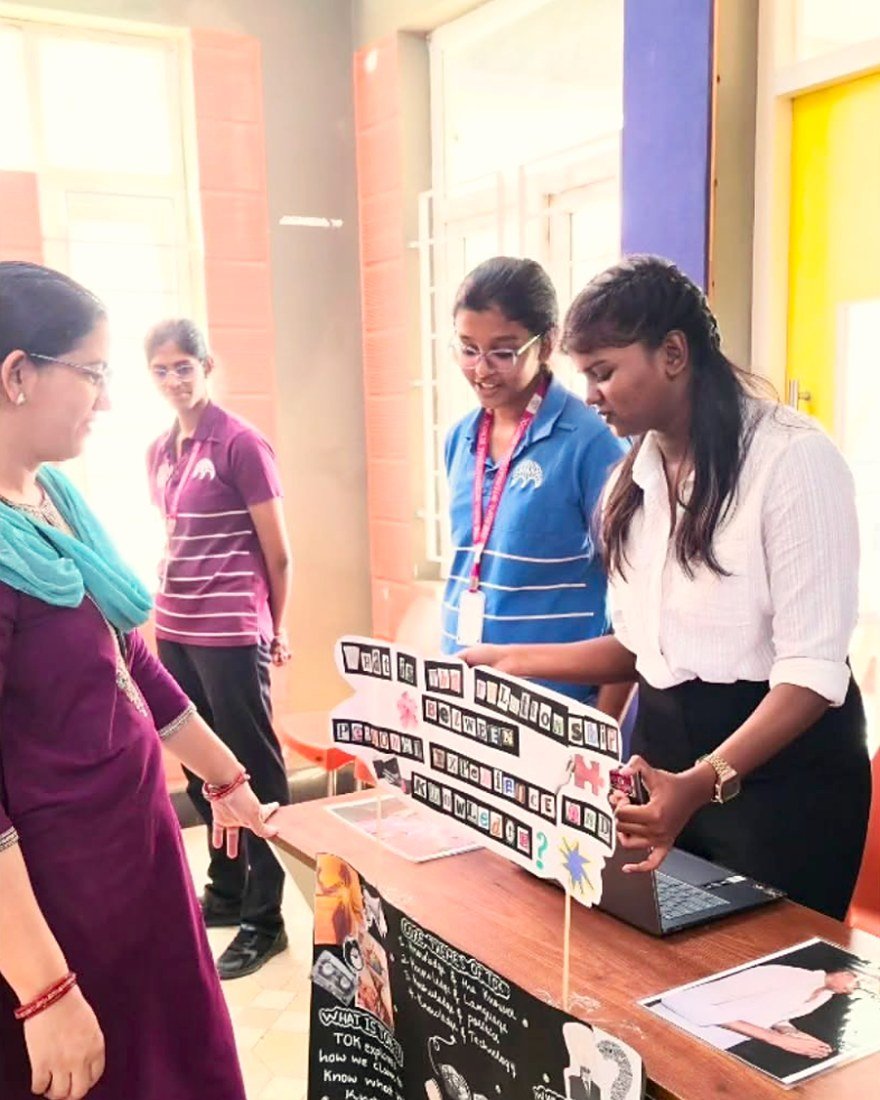
A Diploma student explaining her TOK Exhibition project to a teacher.

The IB Diploma Programme

Six subject groups.
Higher and Standard Level.

Students take one subject from each group, three at Higher Level and three at Standard Level, chosen with their teachers to fit the path they want to follow.

Studies in language and literature

English A: Language and Literature (SL/HL)

Language acquisition

French B (SL/HL) · French ab initio (SL)

Individuals and societies

Business Management · Economics · Psychology (SL/HL)

Sciences

Biology · Chemistry · Physics · Computer Science (SL/HL)

Mathematics

Analysis and Approaches · Applications and Interpretation (SL/HL)

The arts

Visual Arts (SL/HL)

Subject offerings may change from year to year. The Pupil is an authorised IB World School for the Diploma Programme.

THE IB DIPLOMA PROGRAMMEINTERNATIONAL-MINDEDNESSLANGUAGE & LITERATURELANGUAGE ACQUISITIONINDIVIDUALS & SOCIETIESSCIENCESMATHEMATICSTHE ARTSTHEORY OF KNOWLEDGECREATIVITY · ACTIVITY · SERVICEEXTENDED ESSAYAPPROACHES TO LEARNINGAPPROACHES TO TEACHINGTHE IBLEARNERPROFILE

The IB Diploma Programme

How the DP
fits together.

The IB draws the whole programme as one picture. Start at the centre and work out, ring by ring.

  1. The learner profile

    At the centre is your child, and the qualities we hope they grow into.

  2. Approaches to teaching and learning

    Thinking, research, communication, social and self-management skills, built into every subject.

  3. The core

    Theory of Knowledge, the Extended Essay and Creativity, Activity, Service, taken by every student.

  4. Six subject groups

    Three subjects at Higher Level and three at Standard Level.

  5. International-mindedness

    Respect for other cultures, languages and points of view, around everything students learn.

The week at a glance

A week in
Diploma Programme.

A real Form 11 week from our 2026–27 timetable. Periods marked with more than one subject are option blocks: each student goes to the subject they chose.

Time
Monday
Tuesday
Wednesday
Thursday
Friday
8:30–9:30 AM
Chemistry · CS · ESS · Visual arts
Economics · Psychology
Maths AA · GP
Chemistry · CS · ESS · Visual arts
9:30–10:00 AM
Snack break
10:00–11:00 AM
English A
Study period
Maths AI · Physics
English A
Chemistry · CS · ESS · Visual arts
11:00 AM–12:00 PM
Biology · Business
Maths AA · GP
English A
Theory of Knowledge
CAS
12:00–12:30 PM
Lunch
12:30–1:30 PM
Maths AI · Physics
English A
French
Maths AI · Physics
French
1:30–2:30 PM
French
Economics · Psychology
Chemistry · CS · ESS · Visual arts
French
Biology · Business
2:30–3:30 PM
Maths AA · GP
Biology · Business
Maths AI · Physics
Maths AA · GP
Economics · Psychology
  1. 8:30–9:30 AMChemistry · CS · ESS · Visual arts
  2. 9:30–10:00 AMSnack break
  3. 10:00–11:00 AMEnglish A
  4. 11:00 AM–12:00 PMBiology · Business
  5. 12:00–12:30 PMLunch
  6. 12:30–1:30 PMMaths AI · Physics
  7. 1:30–2:30 PMFrench
  8. 2:30–3:30 PMMaths AA · GP

Form 11. Form 11 also has lessons on Saturdays, including physical and health education. Timetables can change during the year.

Outcomes

What growth looks like.

Video stories coming soon.
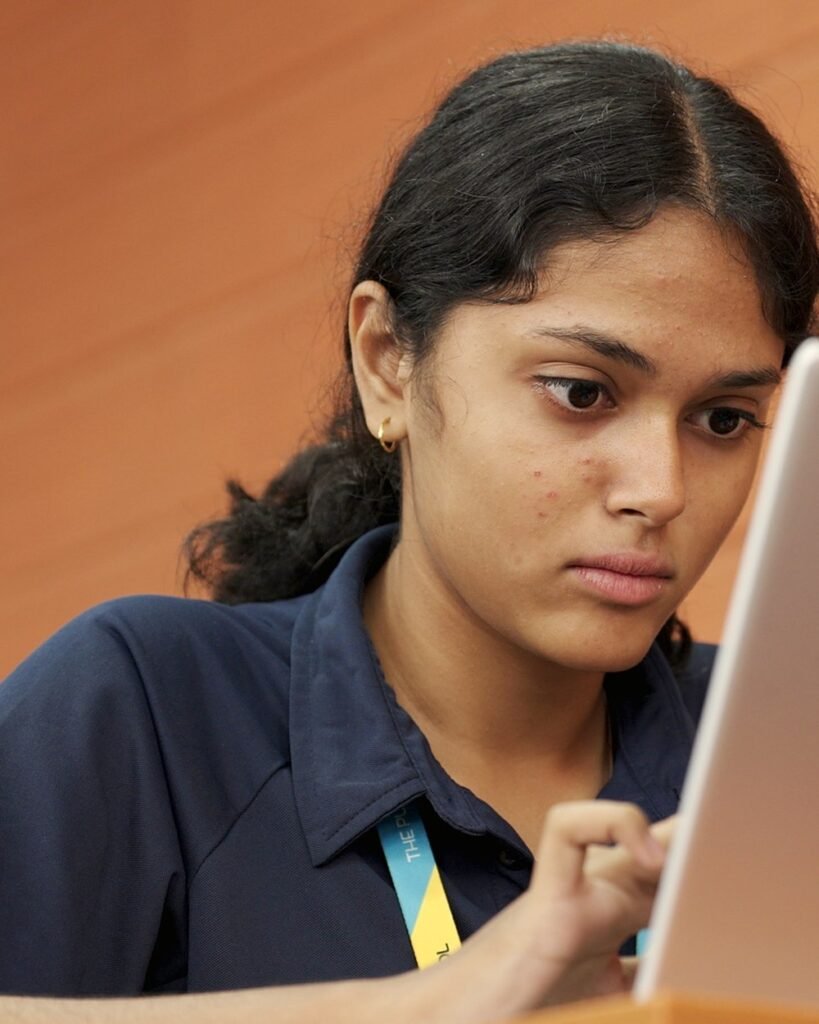
A student working at a laptop.

Self-direction

Video coming soon
A student presenting a project to a teacher.

Putting ideas into words

Video coming soon
A university guidance event at the school.

Looking ahead

Video coming soon

One learning journey

Explore the
other stages.

Early
Years

Explore

Ages 3–6 · Step 1–3

Where curiosity gets its first big questions. Children learn through purposeful play.

THE PUPIL INTERNATIONAL

Primary
Years

Explore

Forms 1–5 · IB PYP

Questions become discoveries. Children explore, connect ideas and build understanding.
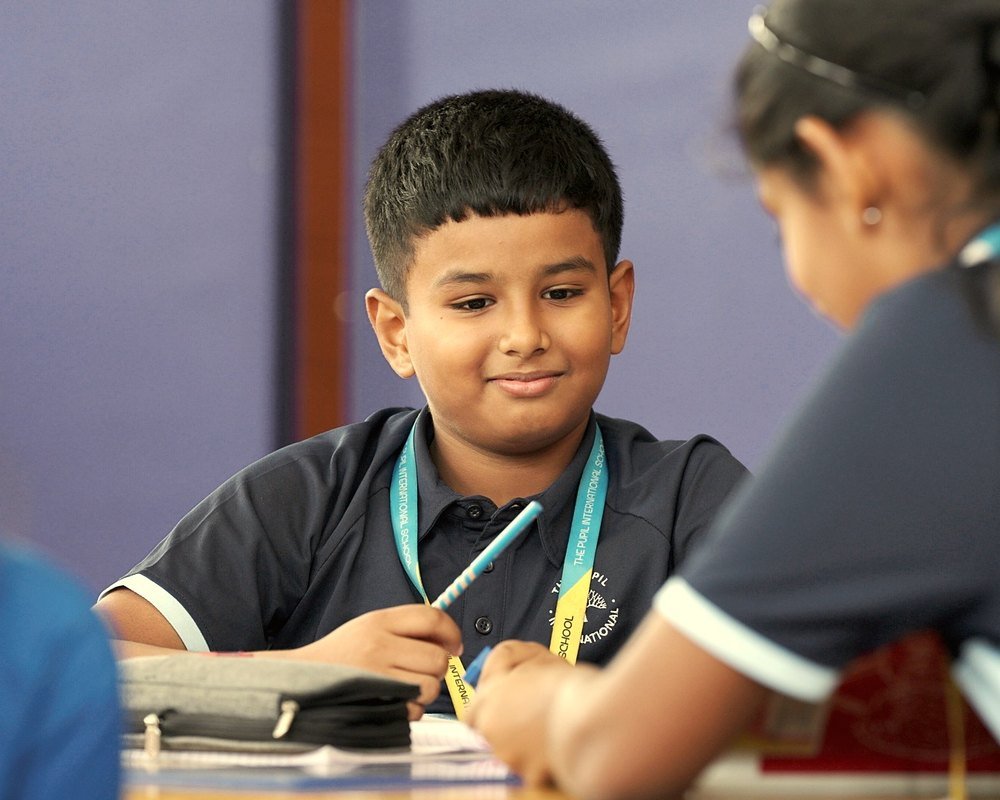
A Primary Years student smiling at his desk.
THE PUPIL INTERNATIONAL

Middle
Years

Explore

Forms 6–10 · IB MYP

Ideas meet the wider world. A time to think critically and find your perspective.

A Middle Years student writing on the board.
THE PUPIL INTERNATIONAL
Let’s make it a little clearer

Before your child
joins us.

Talk to admissions
What is the IB Diploma Programme?
A two-year programme for Forms 11 and 12. Students take six subjects plus the core: Theory of Knowledge, the Extended Essay and Creativity, Activity, Service.
Is The Pupil authorised to offer the IB Diploma?
Yes. The Pupil is an authorised IB World School for the Diploma Programme, as well as for the Primary Years and Middle Years Programmes.
How many subjects does my child take?
Six, one from each subject group: three at Higher Level and three at Standard Level.
How is the diploma scored?
Each subject is graded from 1 to 7, and the core adds up to 3 more points, for a maximum of 45. The diploma is awarded from 24 points, once the other IB conditions are met.
Is the IB Diploma accepted by Indian universities?
Yes, Indian universities generally accept the IB Diploma for admission. Some courses set their own subject or score requirements, so it is worth checking early for the course your child is aiming for.
Will my child get help with university applications?
Yes. A dedicated counsellor works with students in Forms 11 and 12 on choosing universities and courses, applications and timelines, and keeps families involved.
How do we apply?
Start with the interest form below. Our admissions team will call you, talk through subject choices and explain the next steps.
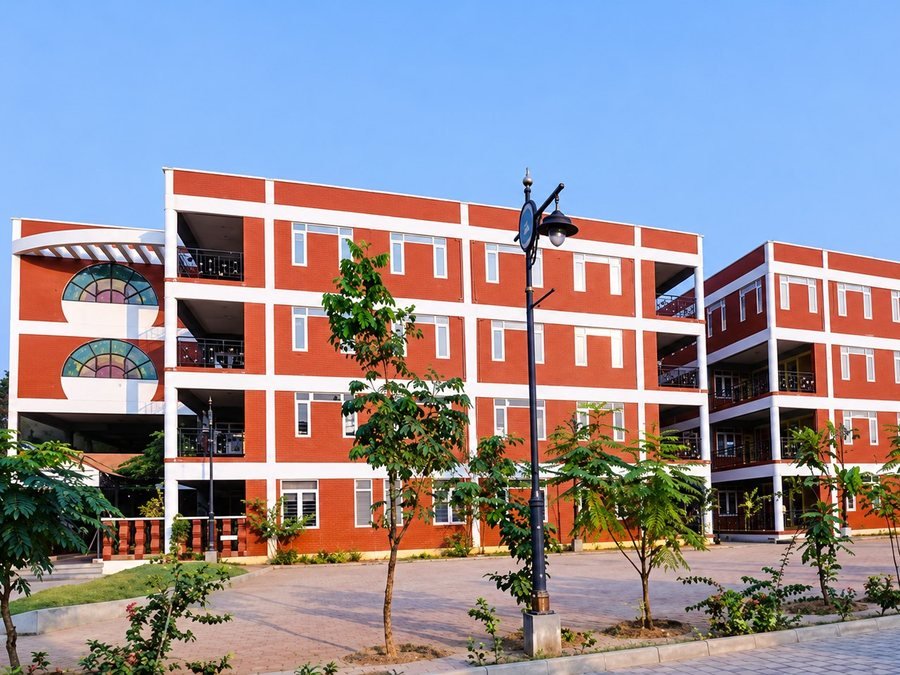
The Pupil International School campus in Chennai.Our campus · Chennai
Admissions

Start with
a conversation.

Interested in learning more about The Pupil? Talk to our admissions team and plan a campus visit.

For a campus visit, please contact our admissions team. We’ll be happy to help you plan your visit.

Email admissions
Senneerkuppam, Chennai

Video coming soon.

In their own words

EYP Story

1 / 4
The Pupil International School

This page isn’t available right now.

Explore our school, or contact admissions and we’ll help you find what you need.