

PYP policy
Assessment.
Feedback that helps every child grow.
At The Pupil, assessment is a positive, continuous process. It shows what each child knows and can do, and helps them take the next step.
Assessment is part of every child’s growth and a stepping stone to lifelong learning. It shows strengths and areas to work on, and tells us how well our programme is working.
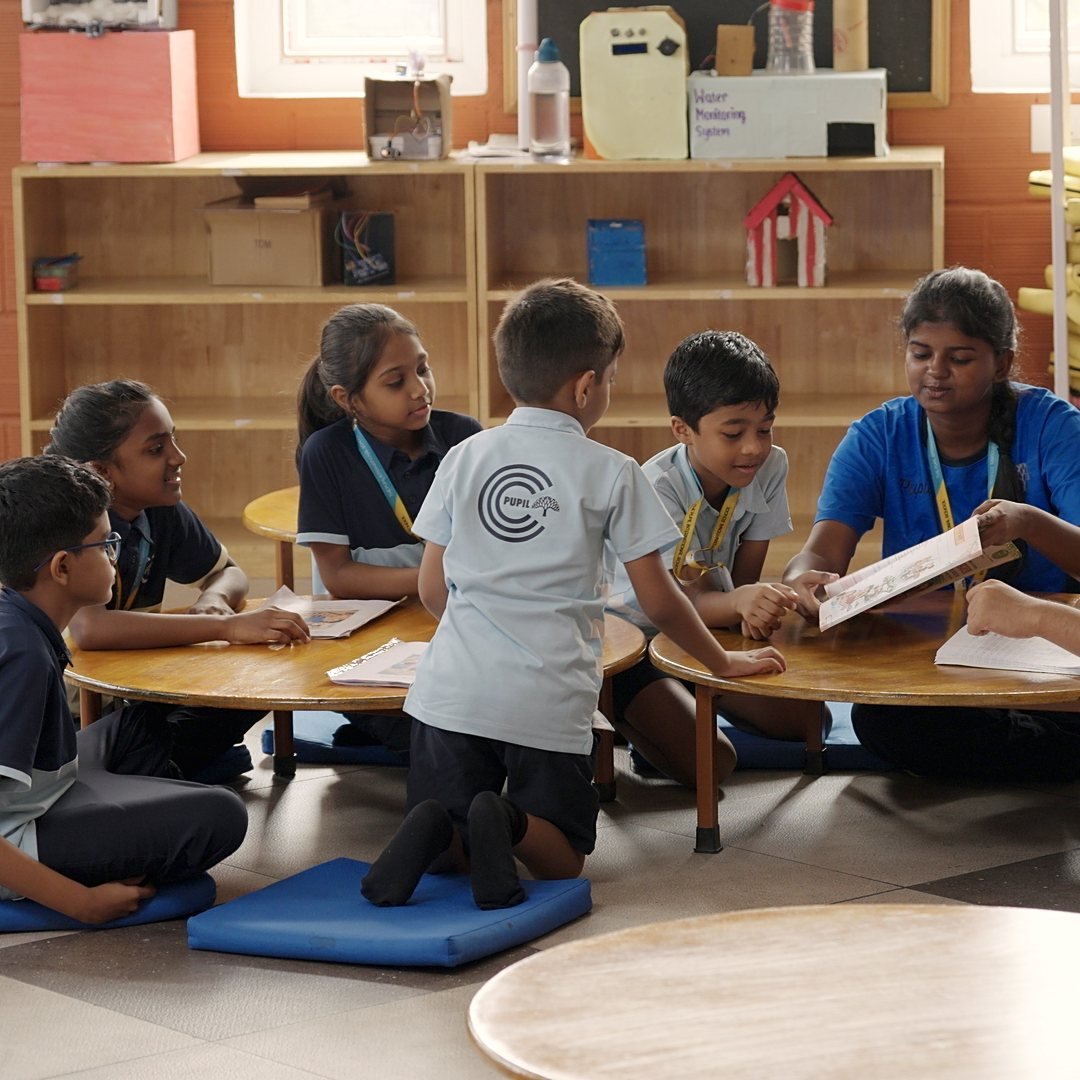
Because every child learns differently, we use a range of assessment strategies, with self, peer and teacher evaluation. The process is open, so that students build confidence and take ownership of their learning.
What good assessment does
- It is part of planning teaching and learning.
- It checks what students already know before new learning begins.
- It uses a balanced range of strategies, reviewed regularly.
- It involves students in both formative assessment, through self and peer review, and summative assessment.
- It gives prompt feedback and regular chances to reflect.
- It matches learning outcomes to the curriculum’s goals.
- It helps us improve the curriculum and our teaching.
- It suits each student’s age and stage of development.
- It keeps student work over time, so progress can be seen.
- It makes expectations clear to students and parents.
- It gives parents meaningful reports on progress.
Aims of this policy
- Make sure assessment happens regularly and is part of the programme.
- Make sure teachers plan, carry out and review assessment together.
- Give clear guidelines for assessment, so that our approach stays varied and keeps improving.
How we assess
All teachers assess, evaluate and report on the students they teach. Students also take part through self and peer assessment. Assessment is ongoing and uses:
- Observation of the whole class or one child, especially for attitudes and skills.
- Tests and quizzes with set answers.
- Open-ended tasks such as essays, presentations, debates, investigations and research.
- Performances that bring ideas to life through art, drama, movement, music or experiments.
- Oral presentations such as speeches, storytelling and debates.
- Rubrics, a set of criteria for rating work in almost any area.
- Portfolios of completed work that show growth over time.
- Exemplars, samples of work used as standards.
- Checklists for reading, writing, goal setting and reflection.
- Anecdotal records and learning stories, brief notes from observation.
- Continuums that show where a student is in their development.
- Peer and self-assessment, where students learn to recognise their own progress and plan their next step.
What we assess
Knowledge, concepts, skills, attitudes, the learner profile attributes, and the action students take.
Reporting
Assessment without feedback is only judgement. Reporting tells families what students know, understand and can do, describes their progress and shows where they can grow. Good reporting is honest, fair and clear, and involves parents, students and teachers as partners.
Conferences
We hold an Orientation Parent Teacher Meeting at the start of each year. Teacher-parent meetings take place six times a year to share progress and answer questions. Three-way meetings with the student, parent and teacher are held when needed.
Written reports
A written report goes home at the end of Terms 1, 2 and 3. It shows strengths and areas to improve across the curriculum, along with comments on the learner profile, attitudes and skills.
Gallery walks
At the end of every unit, parents come to school and students share their learning through presentations, art, performances, demonstrations and experiments.
Portfolio
The portfolio tracks each student’s growth across the curriculum. Students and teachers choose the work that goes in, with reflections on key pieces. Children share their portfolio with parents at the Term 1 gallery walk.
Teacher’s assessment folder
Each teacher keeps an assessment folder for the class, with ongoing records of every student’s development. It is used when writing the term reports.
Policy review
This is a working document and is reviewed every year by the Policy Review Committee: the Managing Trustee, the Head of School, the PYP Coordinator, the Curriculum Coordinator and a teacher lead from each class.
Last reviewed April 2021. Next review March 2022.
Questions about this policy? Write to admission@thepupil.in or call +91 98848 89910.